
Before You Buy Property in Phuket, Ask This: Who Will Buy It From You?
Resale liquidity in Phuket depends on far more than finish or headline rental yield. Ownership structure, genuine scarcity, developer pipeline and how easily a property can be replicated all play a major role. The Anan Exit Test provides a practical framework for assessing those factors before purchase and identifying which properties may face heavy resale competition, and which are more likely to hold their position over time.
- Identify the realistic future buyer before getting distracted by price, finish or projected returns.
- Foreign freehold can significantly broaden the future buyer pool compared with leasehold.
- Real scarcity comes from physical or legal constraints, not marketing language.
- A high rental yield does not guarantee strong long-term resale demand.
- Standardised properties that are easy to replicate generally face greater resale competition.
Before You Buy Property in Phuket, Ask One Question: Who Will Buy It From You?
Every buyer asks about price, layout and view.
Far fewer ask the question that can ultimately determine how successful the purchase becomes:
Who will want to buy this property from you, and when?
In Phuket, that question deserves particular attention.
Supply, ownership structure, remaining development land and genuine scarcity can vary enormously between properties that appear very similar on paper. Two villas priced within a few million baht of each other can have completely different resale prospects. The same applies to condominiums.
Before buying, it is worth looking beyond the sales brochure and understanding what could eventually make the property easy — or difficult — to sell.
That is where the Anan Exit Test comes in.
Why Your Exit Deserves as Much Attention as Your Entry Price
Most buyers naturally focus on the purchase itself.
What is the asking price?
How large is the property?
What is the view?
How good are the finishes?
What rental return is being projected?
All of those questions matter.
But the quality of the purchase is not determined only on the day you buy. It is also determined by what happens when you eventually decide to sell.
A property can look exceptional today and still be difficult to exit later.
Phuket contains everything from genuinely scarce beachfront property to highly standardised condominium stock that can be reproduced across multiple developments within a relatively small area.
That distinction matters.
If the property you buy is easily replaceable, the future buyer has leverage.
If the property is genuinely difficult to replace, you are in a much stronger position.
The point is not to predict exactly what Phuket property prices will be in five or ten years.
Nobody can do that reliably.
The point is to understand the characteristics that are likely to make one property easier to resell than another.
The Anan Exit Test
Before signing a reservation agreement, we believe every buyer should ask a small number of uncomfortable but important questions.
We call this the Anan Exit Test.
Ask yourself:
- Who is the realistic future buyer for this exact property?
- How many similar properties will that buyer be able to choose from?
- Is the ownership structure likely to attract or restrict future buyers?
- How much competing inventory could still be built nearby?
- Will the developer still be selling similar units when you want to resell?
- Is the property’s scarcity genuine, or simply part of the marketing?
- Is the current asking price supported by the resale market?
- Does the property still make sense without the advertised rental projection?
- What becomes more attractive about this property as it ages?
- What becomes less attractive?
If a property cannot survive those questions before you buy it, there is a reasonable chance those same weaknesses will become more obvious when you eventually try to sell it.
Who Will Actually Buy It From You?
This is probably the most important question in the entire process.
Before committing to a property, picture the person who may buy it from you five or ten years from now.
Is it likely to be an overseas investor?
A family relocating to Phuket?
A retiree?
A holiday-home buyer?
An owner-occupier?
A high-net-worth buyer looking for a trophy property?
Each buyer profile values different things.
An investor may care primarily about income and operating costs.
A family may place far greater value on schools, layout, storage, privacy and everyday convenience.
A holiday-home buyer may care more about beach access, views and ease of maintenance.
A high-end buyer may prioritise scarcity, land, privacy, architecture and brand.
The strongest resale properties often appeal to more than one buyer type.
A property that works both as an attractive investment and as somewhere somebody would genuinely want to live usually has a broader future buyer pool than a property designed exclusively around a single investment proposition.
Nationality-independent appeal also matters.
If a project’s resale market depends heavily on buyers from one particular country or one narrow customer segment, demand can become vulnerable when that buyer group disappears or changes direction.
The wider the natural buyer pool, the stronger the resale position tends to be.
Foreign Freehold Versus Leasehold: What It Means for Resale
Ownership structure is not simply a legal detail.
It affects who may be willing to buy the property from you later.
For qualifying condominium units, foreign freehold ownership is generally one of the most straightforward ownership structures available to overseas buyers in Thailand.
That simplicity matters.
Foreign freehold can become particularly valuable in developments where the permitted foreign ownership quota is currently fully allocated.
In that situation, an existing foreign-freehold unit may offer something the developer can no longer sell directly to another overseas buyer on the same basis.
That can create genuine resale differentiation.
Leasehold property can also be highly desirable, particularly where the underlying property itself is exceptional.
But the resale profile is different.
The remaining lease term, assignment provisions, renewal wording and the rights being transferred to the next purchaser all become increasingly important.
A buyer purchasing a leasehold property should understand exactly what the future buyer will inherit.
A contractual renewal provision should also not be treated as though it were automatically equivalent to a guaranteed fresh lease term in the future.
The point is not that leasehold property should be avoided.
The point is that leasehold and foreign freehold should not be evaluated as though their resale characteristics are identical.
Developer Competition and How Easily the Property Can Be Replicated
One of the most overlooked risks in Phuket is competition from the original developer.
Imagine you buy a condominium for THB 20 million today.
Three years later, you decide to sell for THB 24 million.
But the developer is still selling newer units in the same project or a later phase at THB 22 million.
The developer may also be offering payment plans, furniture packages, warranties, incentives or promotional commissions.
You are now competing directly against the company that sold you the property.
That can make resale considerably more difficult.
The same principle applies outside the development itself.
If three nearby projects can offer a similar unit, similar facilities, similar design and similar location, then your future buyer has plenty of alternatives.
That gives the buyer leverage.
It reduces your pricing power.
This is why buyers should not only ask what is available today.
They should also ask what is under construction, what has already been approved and what land remains available nearby.
A quiet location today does not necessarily mean a quiet location five years from now.
Genuine Scarcity Versus Manufactured Scarcity
Almost every property brochure in Phuket contains words such as:
Exclusive.
Limited.
Rare.
Private.
Boutique.
These words do not automatically mean anything.
Real scarcity is not created by a marketing department.
It is created by something that is difficult or impossible to reproduce.
Examples can include:
- genuine beachfront frontage
- protected or difficult-to-replicate sea views
- foreign freehold in a development where the foreign ownership quota is currently fully allocated
- unusually large plots in established locations
- exceptional architecture or floor plans that are no longer commonly built
- property within a proven low-density estate
- locations where surrounding development possibilities are genuinely constrained
The simplest question is:
What prevents somebody from creating another comparable property?
If the answer is nothing, then the property’s supposed exclusivity may disappear as soon as another development launches nearby.
If the answer is geography, ownership limitations, limited land, established planning constraints or something else genuinely difficult to reproduce, the scarcity is more meaningful.
This is especially important in areas such as Bang Tao, Layan and Cherngtalay, where different pockets can have completely different development pipelines despite being marketed under the same broader location name.
What Price Are You Really Buying At?
Developer price lists can create the appearance of capital appreciation long before the resale market has proved it.
Imagine the first phase of a development launched at THB 15 million.
Two years later, the developer launches another phase at THB 20 million.
It is tempting to conclude that everybody who bought at THB 15 million has already made THB 5 million.
That is not necessarily true.
The real question is:
Will an actual secondary-market buyer pay approximately THB 20 million for the earlier property?
Until somebody does, the increase exists primarily on the developer’s price list.
The secondary market is what matters.
There are also other factors to consider.
A developer may be able to offer:
- extended payment terms
- furniture packages
- warranties
- rental incentives
- promotional incentives
- commission structures
- upgrades
A private resale seller may not be able to offer any of those things.
If the developer still controls substantial inventory when you want to sell, you may have to price your property aggressively just to compete.
This is why we prefer to compare a purchase against three things:
The developer’s current pricing.
Competing resale listings.
And, where available, actual recent transactions.
An increase in developer pricing is not automatically the same thing as an increase in resale value.
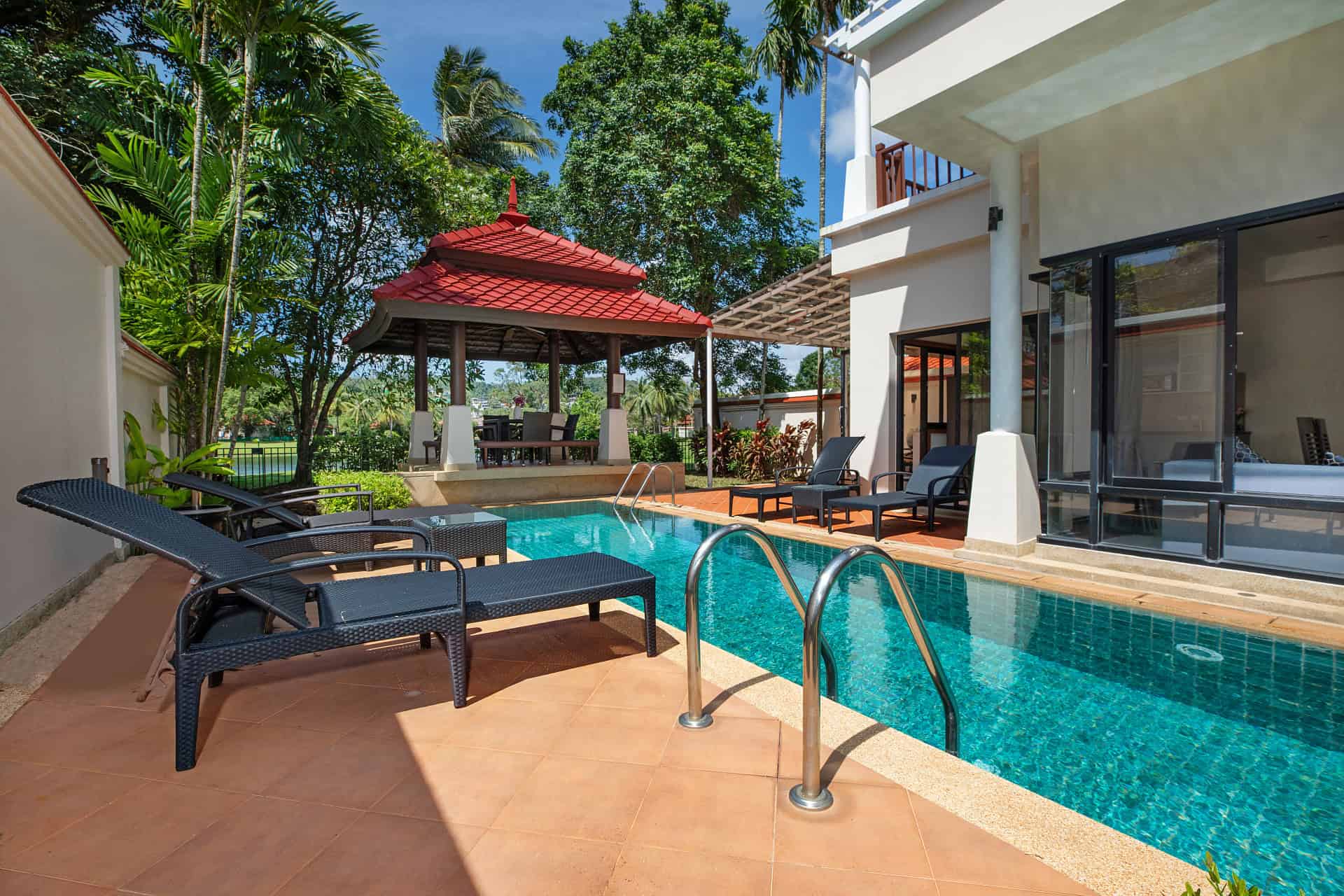
Luxury 4-Bedroom Lakefront Villa for Sale in Laguna Village (Angsana),...



Absolute Beachfront 4-Bedroom Luxury Townhomes: An Elite Coastal Sanct...
Rental Yield Versus Underlying Asset Quality
Rental yield is one of the easiest numbers to market.
It is also one of the easiest numbers to misunderstand.
A projected return of 6%, 7% or 8% can look extremely attractive.
But yield answers only one question:
How much income might the property generate relative to the purchase price?
It does not answer:
Will somebody still want to own the property in ten years?
Resale value depends on factors including:
- location
- ownership structure
- scarcity
- build quality
- management
- competing supply
- maintenance
- future buyer demand
- overall market positioning
A property can produce strong rental income and still have a mediocre resale profile.
Some successful short-term rental properties sit in dense developments designed primarily around investor demand.
Those properties can perform very well operationally while still offering limited differentiation when multiple owners eventually decide to sell.
That does not make them bad investments.
It simply means rental performance and resale quality should be assessed separately.
A strong yield should support the investment case.
It should not replace it.
Weak Exit Versus Strong Exit: Two Examples
Consider two hypothetical purchases.
Property A: Weak Exit
A standardised investment condominium in a large development.
There are several hundred similar units.
Comparable projects are being built nearby.
The developer still controls significant inventory.
The unit has an attractive rental projection and modern finishes.
At the time of purchase, the property looks compelling.
Five years later, the owner decides to sell.
The developer is still releasing stock.
Other owners are also trying to exit.
Newer projects have opened nearby.
A potential buyer can choose between dozens of broadly similar properties.
At that point, the owner’s biggest competitive advantage may simply be price.
The seller who needs to move fastest can end up setting the market.
Property B: Stronger Exit
Now consider a foreign-freehold residence in an established prime location.
The foreign ownership quota in the project is currently fully allocated.
The floor plan is unusually large.
Comparable resale inventory is limited.
The development is established, well maintained and located in an area where similar stock is difficult to reproduce.
Five years later, a foreign buyer specifically looking for that combination has relatively few alternatives.
The property is not valuable merely because somebody described it as exclusive.
It is valuable because replacing it is difficult.
That is the difference between manufactured scarcity and genuine scarcity.
What Types of Phuket Property May Be Harder to Resell?
Every property should be assessed individually, but there are certain characteristics that deserve extra caution.
Highly standardised units in areas with heavy future supply can be vulnerable because buyers have too much choice.
Properties purchased significantly above comparable resale values can take years for the secondary market to catch up.
Leasehold properties with unclear transfer or renewal provisions can narrow the future buyer pool.
Projects relying almost entirely on aggressive rental projections can become harder to sell if those projections are not achieved.
Properties in locations where infrastructure, access or surrounding development negatively changes can also lose appeal.
None of these characteristics automatically make a property a bad purchase.
But they should affect the price you are prepared to pay.
What Types of Phuket Property May Remain Easier to Sell?
There are no guarantees.
But certain characteristics tend to create stronger foundations for resale.
These can include:
- genuine beachfront property
- foreign-freehold units in desirable projects where the foreign ownership quota is currently fully allocated
- established developments with proven management
- large or unusual floor plans that are difficult to replicate
- prime sea-view property where the view is genuinely protected or difficult to obstruct
- villas on substantial plots in established low-density communities
- high-quality properties that work for both investors and owner-occupiers
- properties in locations where buyers already want to live, rather than locations relying entirely on promised future development
The common factor is not price.
It is difficulty of replacement.
The Best Time to Think About Selling Is Before You Buy
Most buyers do not want to think about selling when they are excited about buying.
That is understandable.
But that is precisely when the question is most valuable.
Before you commit, ask:
Who is the next buyer?
What will they compare this property against?
How much competing stock can still be built?
What ownership structure will they inherit?
Will the developer still be competing against me?
Is today’s price supported by the actual resale market?
Does the property still make sense without the rental projection?
What becomes more attractive about the property as it ages?
What becomes less attractive?
A strong property should have convincing answers.
Already Considering a Property in Phuket? Send It to Us.
It does not need to be listed with Anan Property Group.
If you are considering a villa, condominium, branded residence or investment property in Phuket, send us the details.
We can give you our view on the property’s ownership structure, competing supply, resale positioning and likely future buyer pool.
Sometimes we will tell you we think it is a strong purchase.
Sometimes we will suggest negotiating.
And sometimes, the best advice is to walk away.
Disclaimer: This article is provided for general informational purposes only and should not be considered legal, tax or investment advice. Ownership structures, lease terms and individual circumstances vary. Buyers should obtain independent legal advice from a qualified Thai lawyer before entering into any property transaction.

Banyan Tree Beach Residences Aegir – The Final Oceanfront Masterpiece ...
3 Bedroom Penthouse Duplex – Bangtao Beach
Luxury Beachside Pool Villas: Contemporary Tropical Serenity Near Bang...
Ultra-Luxury 4-Bedroom Ocean View Penthouse: A Single-Level Coastal Sa...
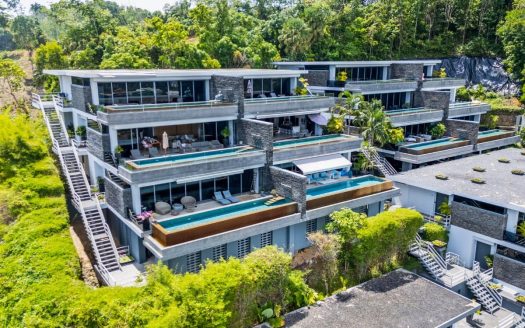
Turnkey 3-Bedroom Sea View Pool Apartment: A Hillside Sanctuary in Lay...

Ocean View 5-Bedroom Super Villa: A Tropical Masterpiece in Layan
Related reading


