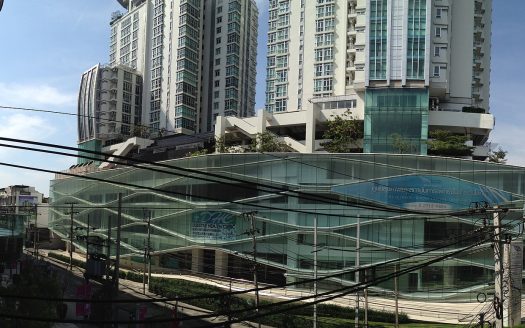
Buying a condo in Bangkok as a foreigner: quota, FET and title

Foreigners can own a Bangkok condo freehold if the building's foreign ownership stays within 49% of saleable floor area. The purchase runs in a fixed order: reservation and due diligence, a sale agreement, bringing funds in as foreign currency with an FET, then registration and transfer costs at the Land Office.
- Foreigners can own Bangkok condo units freehold, but never land in their own name.
- The 49% foreign quota is measured by saleable floor area, so confirm availability for the specific unit in writing.
- Funds must arrive in foreign currency and be converted in Thailand, with an FET or credit advice as proof.
- Transfer costs are fixed by law, but who pays the 2% transfer fee is negotiable.
- Keep the title deed, FET forms and receipts together; you will need them again when you sell.
Thailand does not let foreigners own land, but it does let them own a condominium unit outright, in their own name, with a title deed registered at the Land Office. For most international buyers in Bangkok, that single exception is the whole market.
The process is well trodden and not especially complicated, but it has a fixed order and a few documents that cannot be produced after the fact. The most important of them, the record of how your money entered the country, has to be right from the first transfer.
This guide walks through a foreign freehold purchase step by step, from the reservation deposit to the day you collect the title at the Land Office, as of November 2026.
The rule that makes it possible: the 49% foreign quota
Under the Condominium Act, foreigners may own condominium units freehold provided that total foreign ownership in the building stays within 49% of the saleable floor area. The quota is measured by floor area, not by the number of units, so a building with many large foreign-owned penthouses can fill up faster than one with mostly studios.
The other 51% must be held by Thai nationals or Thai entities. Once the foreign share is used up, a foreigner can no longer register freehold ownership in that building, whatever the seller or the agent says. Leasehold may still be possible, which we cover in a separate guide.
The quota is managed by the building’s juristic person, the legal body that runs the common property. Before you commit to a resale unit, ask for written confirmation that foreign quota is available for that specific unit. The Land Office will ask for the same confirmation at transfer.
New-build and resale quota work differently
With an off-plan or newly completed project, the developer allocates its own foreign quota and will tell you whether a unit is sold as foreign freehold. With a resale, the position depends on who the seller is. If the seller is already a foreigner who owns freehold, the unit’s quota passes to you. If the seller is Thai, the sale only works as foreign freehold if the building still has quota left.
Step 1: reservation and due diligence
Most purchases begin with a reservation agreement and a deposit that takes the unit off the market for a short period while the contract is prepared. Read the reservation terms carefully, particularly whether the deposit is refundable if checks turn up a problem.
Use that period for due diligence. For a resale, that means confirming the seller’s ownership against the title deed, checking for mortgages or other registered encumbrances, and asking the juristic office whether common fees are paid up. For an off-plan project, it means reviewing the developer’s track record, the construction and completion terms, and what happens if delivery runs late.
An independent lawyer, appointed by you rather than recommended by the seller, is money well spent. They can check the title and the contract and, if you wish, act for you at the Land Office under a power of attorney.
Step 2: the sale and purchase agreement
The sale and purchase agreement sets out the price, the payment schedule, the transfer date and, importantly, who pays which transfer costs. These are negotiable in Thailand, so they should be written down rather than assumed.
Points worth checking in the agreement include:
- That the unit is sold as foreign freehold and that the seller will provide the documents needed for a foreign registration.
- The deposit amount and the conditions under which it is returned or forfeited.
- Exactly what is included: furniture, appliances, parking rights and any storage.
- The split of the transfer fee and the seller’s responsibility for their own taxes.
- For off-plan units, the completion date, the specification and the defects period.
Step 3: bringing the money in correctly
This is the step where foreign purchases most often go wrong. To register a foreign freehold condominium, the purchase funds must be sent into Thailand in foreign currency and converted to baht by the receiving Thai bank.
For each qualifying transfer, the bank issues a Foreign Exchange Transaction Form, usually called an FET, or a credit advice that records the foreign-currency origin. The Land Office requires this evidence to register a foreign freehold condo, and it needs to cover at least the purchase price.
Practical points to get right:
- Send the money in a foreign currency, not baht converted abroad.
- State the purpose clearly in the transfer reference, such as the purchase of a named condominium unit, and include the buyer’s name.
- Ask the receiving bank in advance how it issues FETs or credit advices and what threshold applies.
- Keep every document. You may need the same paperwork if you later sell and want to send the proceeds abroad.
Step 4: preparing for the Land Office
In the weeks before transfer, the paperwork comes together. For a resale, the seller obtains a letter from the juristic person confirming that common fees are fully paid, alongside the foreign-quota confirmation. Without the debt-free letter, the Land Office will not proceed.
As the buyer, you will typically need:
- Your passport, and a copy.
- The FET forms or credit advices showing the funds came from abroad.
- The signed sale and purchase agreement.
- A power of attorney, if someone is attending on your behalf.
If the seller has a mortgage, their bank will usually attend the transfer to receive its payoff and release the mortgage at the same appointment. Your lawyer should coordinate this so the cheques and the release happen together.
Step 5: transfer day
Transfer happens at the Land Office branch responsible for the building’s district. Buyer, seller (or their representatives) and any lender meet there, the officials check the documents, the costs are paid and ownership is registered.
The costs collected on the day are set by law, though the split between buyer and seller is agreed in the contract:
- A transfer fee of 2% of the official appraised value, commonly split between the parties.
- Specific business tax of 3.3% if the seller is selling within five years of acquiring the unit; otherwise stamp duty of 0.5%.
- Withholding tax, which is the seller’s liability.
Payment to the seller is usually made by bank cheque at the Land Office, so that the money and the title change hands at the same moment. At the end, the condominium title deed is endorsed with your name. Keep it safe, together with your FET paperwork and the Land Office receipts.
After transfer
A few loose ends follow every purchase. Register yourself as the new owner with the juristic office, set up payment of the monthly common fee, and transfer the electricity and water accounts into your name or confirm how the building bills them.
If you plan to let the unit, check the building’s rules on letting before you advertise, and keep the lease and tenant records organised from the start. If you will live in it, it is worth looking at the long-stay visa options, such as the Long-Term Resident visa or Thailand Privilege membership. Ownership of a condo does not by itself give a right to stay, so check the current rules for each.
For a sense of where foreign buyers tend to look, our Bangkok overview and area guides such as Phrom Phong and Sathorn are a good starting point.
Talk to us before you reserve
The order of events matters more than any single step, and most problems are avoided by getting the quota confirmation and the money transfer right at the outset. Anan Property Group works with buyers in Bangkok, as we do in Phuket, from the first viewing through to the Land Office. Get in touch and we will talk you through the process for the units you are considering.

Ayara Villa | Sea View Luxury Villa in Surin, Phuket


Baan Banyan | Iconic Sea View Estate on Kamala Headland, Phuket

Luxury Pool Villas in Pasak Soi 8, Cherng Talay (Bang Tao), Phuket
Luxury Pool Villas in Pasak Soi 8, Cherng Talay (Bang Tao), Phuket
Final Two Luxury Pool Villas in Bang Tao | Ready to Move In
Ultra-Luxury 4-Bedroom Layan Hill Estate with Cinema & Gym near He...
Related reading