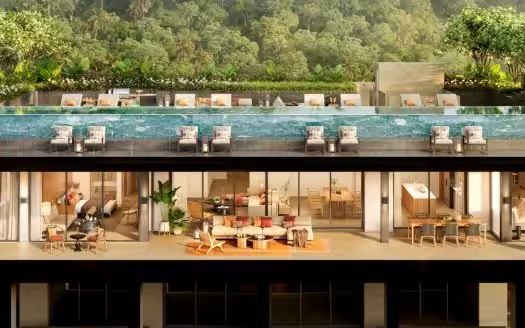
How to Buy Off-Plan Property in Phuket Safely
Buying off-plan in Phuket can offer lower entry prices, staged payments and choice of units, but the main risks are weak developers, thin regulation and poorly structured contracts. Buyers should treat due diligence as essential: verify the developer, permits, funding, ownership structure and payment protections before paying a reservation fee.
- Thailand does not mandate escrow for off-plan condominium sales, so negotiate payment protection wherever possible.
- Choose developers with completed Phuket projects, clear funding and required permits already in place.
- Tie instalments to verified construction milestones rather than fixed calendar dates.
- Confirm foreign freehold quota for condos before reserving, or agree the villa lease structure in advance.
- Use an independent bilingual Thai property lawyer before signing any Sales and Purchase Agreement.

Off-plan property is where Phuket’s most attractive entry prices sit, and also where its most painful losses have happened. For every buyer who reserved a villa at a pre-launch discount and watched it complete on time, there is another who paid a deposit to a first-time developer and found, three years later, that construction had stalled with no clear way to recover the money. The difference between those two outcomes is rarely luck. It is almost always the quality of the work done before the deposit was paid. This guide sets out how to buy off-plan property in Phuket safely: what off-plan really involves here, where the genuine risks sit, and the specific checks that move the odds firmly in your favour.
Buyers comparing live projects can browse our Phuket off-plan and new developments, and those weighing the pre-construction route against finished stock will find current Phuket condos and apartments useful for a like-for-like comparison. Our step-by-step guide to buying property in Phuket covers the wider acquisition process that sits around any off-plan purchase.
What Off-Plan Property Actually Means in Phuket
Off-plan means buying a property before it is finished, sometimes before construction has even started. Instead of paying the full price for a completed home, you reserve a specific unit from the developer’s plans and pay in stages as the building goes up. You receive the property on completion, when the title is transferred into your name or your chosen ownership structure.
In Phuket, off-plan applies mainly to condominiums and to managed villa projects, and it makes up a large share of the available market because the island is still a developing one by international standards. That immaturity is exactly why the safeguards in this guide matter more here than they would in a heavily regulated market. The product can be excellent. The regulatory cushion underneath it is thinner than most overseas buyers expect.
Why Buyers Choose Off-Plan, and What They Take On
The appeal of off-plan is real and worth stating plainly. Early buyers usually pay the lowest prices in a project, before public marketing pushes them up. Payments are spread across the build rather than due in full on day one, which eases cash flow. Buyers can often choose finishes or a preferred unit, view, and floor. And in strong projects, the price can rise meaningfully between launch and handover. None of that is a myth.
The honest way to read off-plan, though, is that every one of those benefits carries a matching risk. The table below pairs them, because a buyer who can see both columns at once tends to make better decisions than one who has only seen the brochure.
| The Benefit | The Matching Risk |
|---|---|
| Lower pre-launch entry price | The developer is using your money to fund construction |
| Staged payments over the build | A front-loaded schedule shifts risk onto you |
| Potential capital growth by handover | Appreciation is not guaranteed and depends on the cycle |
| Customisation and unit choice | What is built may differ from the showroom and the render |
| Brand-new home with warranty | Delays, defects, or abandonment if the developer is weak |
As one experienced Phuket adviser puts it, the key risk is not buying off-plan; it is buying blindly. Almost every pitfall below can be managed with the right preparation, legal support, and developer. The point of this guide is to make that preparation concrete.
The Escrow Gap Every Buyer Must Understand
This is the single fact that surprises most overseas buyers, and it deserves a section of its own. In Thailand, escrow is not legally mandated for off-plan condominium sales. There is an Escrow Act dating from 2008 that allows a licensed third party to hold staged payments and release them as construction milestones are met, but its use is voluntary and, in practice, uncommon. Markets that foreign buyers often compare Phuket to, such as Dubai and post-2023 Bali, do require developer escrow. Thailand does not.
| What this means in practice: unless you negotiate otherwise, your staged payments may go straight to the developer rather than into a protected account. If the developer runs into trouble before completion, recovering that money can be slow, costly, or impossible. Wherever you can, insist on an escrow arrangement or, at minimum, payments tied strictly to verified construction milestones with clear refund terms in the contract. |
Escrow is not the only safeguard, and a strong developer with a long delivery record carries far less risk than a first-time builder even without it. But understanding that the statutory safety net is thin reframes everything that follows. Your protection in Phuket comes mostly from who you buy from and how the contract is written, not from regulation doing the work for you.
The Phuket Off-Plan Market in 2026
Buying safely also means buying with current market data rather than the figures from the last boom. The Phuket off-plan market has shifted, and anyone advising you on 2023 numbers is giving you an outdated picture.
| According to the Real Estate Information Center (REIC), Phuket’s new condominium market cooled sharply in the first half of 2025: new launches fell by more than half against the same period a year earlier, the monthly absorption rate dropped from around 7% in late 2023 to roughly 2.9% by mid-2025, and the time to sell out a typical project stretched from about 14 months to 28. Unsold condo inventory reached a record level by mid-2025. |
This does not mean the market is broken. Phuket’s tourism economy and constrained west-coast supply remain genuine strengths. But a softer, slower-absorbing market changes the safety calculus in two ways. First, completing into a crowded market makes a quick resale at handover less certain than it was at the peak, so buyers planning to flip on completion need a realistic exit view. Second, when sales slow, weaker developers who were relying on fast pre-sales to fund construction come under pressure, which makes developer selection more important now, not less. For a fuller read on where the island sits, our analysis of
the five key Phuket property trends for 2026 puts these numbers in context for buyers deciding when and where to commit.
Vetting the Developer Before You Reserve
Because regulation is light and escrow is rare, the developer is your most important safeguard. Vetting them is not optional, and it is not something to take on trust from a glossy brochure. Work through three things before you reserve.
Track Record and Delivered Projects
Ask how many projects the developer has completed in Phuket in the last five years, and then go and see them. Visit at least two finished developments, and speak to current owners about handover defects, snagging, and how the building is managed now that the sales team has moved on. A developer presenting beautiful renders, asking for a large pre-construction deposit, and unable to show a single delivered project is a serious risk regardless of how good the location story sounds. Note too that a Bangkok developer new to Phuket can underestimate the island’s logistics and humidity-related construction challenges.
Financial Strength and Funding
A project can stall simply because the developer runs out of money. Ask whether the build is bank-financed or funded entirely from the sales cycle, because a development that depends on hitting sales targets to pay its own contractors is more exposed if the market slows. Publicly listed developers and those with institutional backing or international operator partnerships generally carry less delivery risk. Your lawyer can check the company’s filings, any litigation, and its financial position.
Permits and Approvals in Place
Certain approvals are legal prerequisites, and their absence is a clear warning sign. For a condominium, the project must have an approved Environmental Impact Assessment (EIA) before construction can legally begin; for villas, the relevant building permits must be in place. Confirm, too, that the land underneath the project carries a clean Chanote title and that zoning and any coastal setback rules are satisfied. A developer who is vague about permits is a developer to avoid.
Structuring the Contract and Payments Safely
Once the developer checks out, the contract is where your money is either protected or exposed. Never sign a Sales and Purchase Agreement on an off-plan unit without an independent, bilingual Thai property lawyer reviewing it first. Off-plan contracts are frequently drafted in the developer’s favour, and the buyer’s protections have to be negotiated in, not assumed.
Tie Payments to Construction, Not the Calendar
The safest payment schedules release money as the building physically progresses rather than on fixed dates. A milestone-linked plan might look like the example below. The exact split varies by project, but the principle holds: the less you pay before there is a building to show for it, the lower your exposure.
| Stage | Typical Payment | Released When |
|---|---|---|
| Reservation | Fixed booking fee | Unit taken off the market |
| Contract signing | 20% to 30% | Sales and Purchase Agreement executed |
| Foundation / structure | Staged instalments | Verified construction milestones reached |
| Completion and handover | Final balance | Title transferred at the Land Office |
Clauses to Insist On
- A clear completion date with defined remedies and refund terms if the developer misses it by a stated margin.
- Payments expressly tied to verified construction milestones, with an escrow mechanism wherever the developer will agree to one.
- A construction warranty, commonly one to two years on the structure and core systems, written into the agreement.
- An assignment clause, if you may want to resell the contract before completion. Without it you cannot legally transfer your purchase, and confirming this is non-negotiable due diligence for any investor.
- Confirmation that finishes, fittings, and unit specification match what was marketed, with recourse if they do not.
Foreign Ownership and Reaching Completion
The final layer is ownership, which determines what you actually hold when the building is finished. For off-plan condominiums, foreign nationals can own units freehold in their own name, but only within the project’s foreign quota, capped at 49% of the total saleable floor area. Confirm that quota is still available for your specific unit before you reserve, because once it is full, no further foreign freehold transfers are possible and your only route may be leasehold.
For off-plan villas, foreigners cannot own the land, so the structure is usually a registered 30-year lease or, less commonly, a company arrangement that now attracts heavy official scrutiny. Our guide to foreign ownership of villas and condos in Thailand sets out each route and its trade-offs in detail.
Reaching completion safely also means preparing the money trail early. For a freehold condominium, the purchase funds must be remitted into Thailand from abroad in foreign currency, and the bank issues a Foreign Exchange Transaction Form recording the transfer. The Land Office requires this document to register a foreign freehold unit, and officers have been scrutinising it more closely. Title transfers on the day of completion, when the developer hands over the unit and the Land Office records you as the owner, so the title check that protected you at the start should be repeated at handover.
| A practical sequence for foreign buyers: confirm foreign quota availability before reserving, remit purchase funds from abroad in foreign currency, keep the bank’s Foreign Exchange Transaction Form and credit advice, and have your lawyer verify the title and the building’s completion status again before the final payment is released at handover. |
Your Pre-Reservation Safety Checklist

Pull the guidance together and a single, ordered checklist emerges. Run through it before you pay any reservation fee, not after.
- Verify the developer. Confirm at least two completed Phuket projects in the last five years, visit them, and speak to existing owners.
- Check funding and permits. Establish how the build is financed, and confirm the EIA or building permits and a clean Chanote title are in place.
- Confirm ownership and quota. For condos, check the 49% foreign freehold quota still covers your unit; for villas, agree the lease or structure in advance.
- Engage an independent lawyer. Use a bilingual Thai property lawyer who is not the developer’s, to review the Sales and Purchase Agreement before you sign.
- Protect the payments. Tie instalments to verified milestones, push for escrow, and secure clear refund, warranty, and assignment clauses.
- Plan completion early. Remit funds from abroad in foreign currency, keep the Foreign Exchange Transaction Form, and re-verify title at handover.
Off-plan is a strategy, not a gamble, and Phuket rewards buyers who treat it that way. The pre-construction route can deliver a brand-new home and genuine value, particularly in supply-constrained west-coast areas like Bang Tao and Laguna. The buyers who get into trouble are almost always the ones who skipped the due diligence because the render was beautiful and the launch discount was ticking. If you would rather have the checks handled end to end, our team acts as an independent Phuket buyer’s agent, and our curated off-plan opportunities are limited to developers whose delivery record we can verify.


Ayara Villa | Sea View Luxury Villa in Surin, Phuket


Baan Banyan | Iconic Sea View Estate on Kamala Headland, Phuket

Luxury Pool Villas in Pasak Soi 8, Cherng Talay (Bang Tao), Phuket
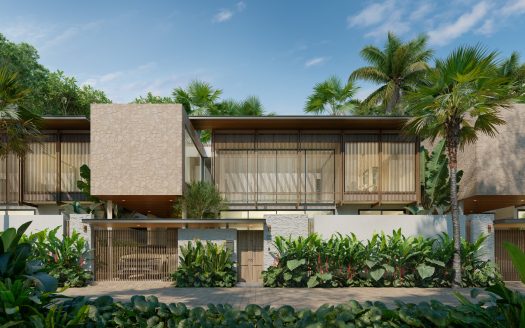
Luxury Pool Villas in Pasak Soi 8, Cherng Talay (Bang Tao), Phuket
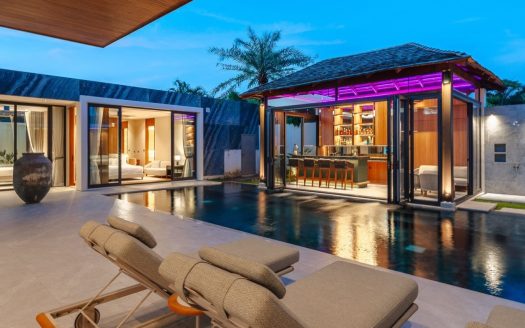
Final Two Luxury Pool Villas in Bang Tao | Ready to Move In
Ultra-Luxury 4-Bedroom Estate with Cinema & Gym near Layan Beach,...
Related reading