How to Buy Land in Phuket as a Foreigner (2026 Guide)
Foreigners cannot directly own land in Thailand, including Phuket, but can secure long-term access through registered leasehold, superficies or usufruct structures. The article explains how these options work, why Chanote title and independent legal checks are essential, and how the 2025 Supreme Court ruling limits reliance on automatic lease renewals.
- Foreign buyers should not expect direct land ownership in Phuket under their own name.
- A registered 30-year lease is common, but automatic 30+30+30 renewals are not legally guaranteed.
- Superficies can give a foreign buyer registered ownership rights over the building, separate from the land.
- Use Chanote title wherever possible and verify it directly at the Land Department before paying a deposit.
- Nominee Thai company structures are illegal and carry serious enforcement and forfeiture risks.
Phuket attracts international investors from across Asia, Europe, and the Americas, and land is consistently among the first questions they raise. The instinct is understandable: land represents permanence, development potential, and the ability to build entirely to one’s own specification. The legal reality, however, is less straightforward than in most Western markets.
Thai law does not permit foreign nationals to own land outright. But understanding that single fact is only the starting point. Three distinct legal structures allow foreigners to secure reliable, long-term access to Phuket land. Knowing how they work, where they differ, and what a landmark 2025 court ruling changed is the practical knowledge that separates buyers who proceed confidently from those who rely on assurances they have not independently verified.
This guide is intended for buyers at the research stage: people who have identified Phuket land as a serious possibility and want current information before engaging agents or developers. If you are already exploring Phuket land plots specifically, the due diligence checklist and the steps overview toward the end of this guide will be immediately relevant.
Can Foreigners Buy Land in Thailand? The Legal Position
The answer is unchanged: no foreign national can directly own land in Thailand under their own name. Section 86 of the Thai Land Code (B.E. 2497) establishes this prohibition clearly, and it applies across all provinces, including Phuket. There is no carve-out for high-net-worth buyers, long-term residents, or holders of premium visa programmes such as the Thailand Elite or Long-Term Resident Visa.
There is one narrow exception. Section 96 bis of the Land Code permits a foreign individual to own up to 1 rai (approximately 1,600 square metres) of residential land, provided they invest at least THB 40 million in qualifying assets and obtain explicit Cabinet approval. The Board of Investment of Thailand publishes the eligible investment channels on its official website. In practice, approvals under Section 96 bis are rarely granted, the investment must be maintained for three to five years, and the right does not pass to heirs. It is not a viable route for the typical buyer in Phuket.
Ownership structures at a glance
Legal Structures That Give Foreigners Access to Phuket Land
Because direct ownership is closed, buyers who want a land-and-villa asset in Phuket work through one of three properly registered legal structures. Each provides a different balance of security, flexibility, and practical protection.
Long-Term Leasehold
A 30-year registered lease is the most widely used structure for foreign buyers in Phuket. When registered at the Land Department, the lease appears directly on the title deed and gives the leaseholder a legally enforceable right to occupy and use the land for the full registered term. Leasehold villas can be sold, subleased, and in some cases mortgaged, depending on the terms agreed in the contract.
Developers frequently market these arrangements using “30+30+30-year” language, implying that the buyer is effectively secured for 90 years. This framing is legally misleading, and a March 2025 Supreme Court ruling confirmed why. Buyers should read our guide to Thailand’s 30+30+30 leasehold agreements before signing any agreement that includes pre-agreed renewal language.
Superficies Rights
A superficies right (sap-ing-sith in Thai) separates ownership of a building from the land beneath it. Registered at the Land Office under the Thai Civil and Commercial Code, a superficies grants the foreign buyer direct, registrable title to the structure (the villa itself), while the Thai landowner retains title to the plot. The maximum term is 30 years, and the right can be combined with a lease over the same land parcel.
Legal practitioners increasingly recommend superficies as the stronger structure for protecting the building asset. Since 2019, with clarifications to its application, it has become the preferred approach in well-advised Phuket transactions because it gives the foreign buyer a registered property right of their own, not merely a contractual entitlement under a lease.
Usufruct
A usufruct grants the right to use and derive economic benefit from land for a fixed period of up to 30 years, or for the holder’s lifetime if the parties agree a personal usufruct. Like superficies, it is registered at the Land Office and noted on the title deed. Usufructs are most commonly used in family arrangements or layered with a lease for additional protection, but personal usufructs extinguish on the holder’s death and do not transfer automatically to heirs, which makes them less appropriate for investors focused on estate planning.
The Thai Company Route and Its Risks
Some buyers approach land ownership through a Thai-registered company, reasoning that if a Thai entity holds the title, a foreign director or shareholder retains effective control. Thai law permits this only where the company has genuine Thai majority ownership of at least 51%, held by actual Thai shareholders who have contributed real capital and participate in business decisions.
Nominee structures, where Thai names appear on company documents while a foreign buyer holds all effective control, are illegal under both the Foreign Business Act and the Land Code. Enforcement activity increased sharply in 2025 and 2026, with the Department of Business Development cross-referencing corporate registrations against banking records in Phuket, Koh Samui, and Chiang Mai. Penalties include criminal prosecution and forfeiture of the land asset. Any agent who presents nominee shareholders as a straightforward solution should be treated as a serious red flag.
4 Bedroom Beach Front Island Residences


Grand 5 Bedroom Island Escape Villa
Understanding Land Title Deeds in Phuket
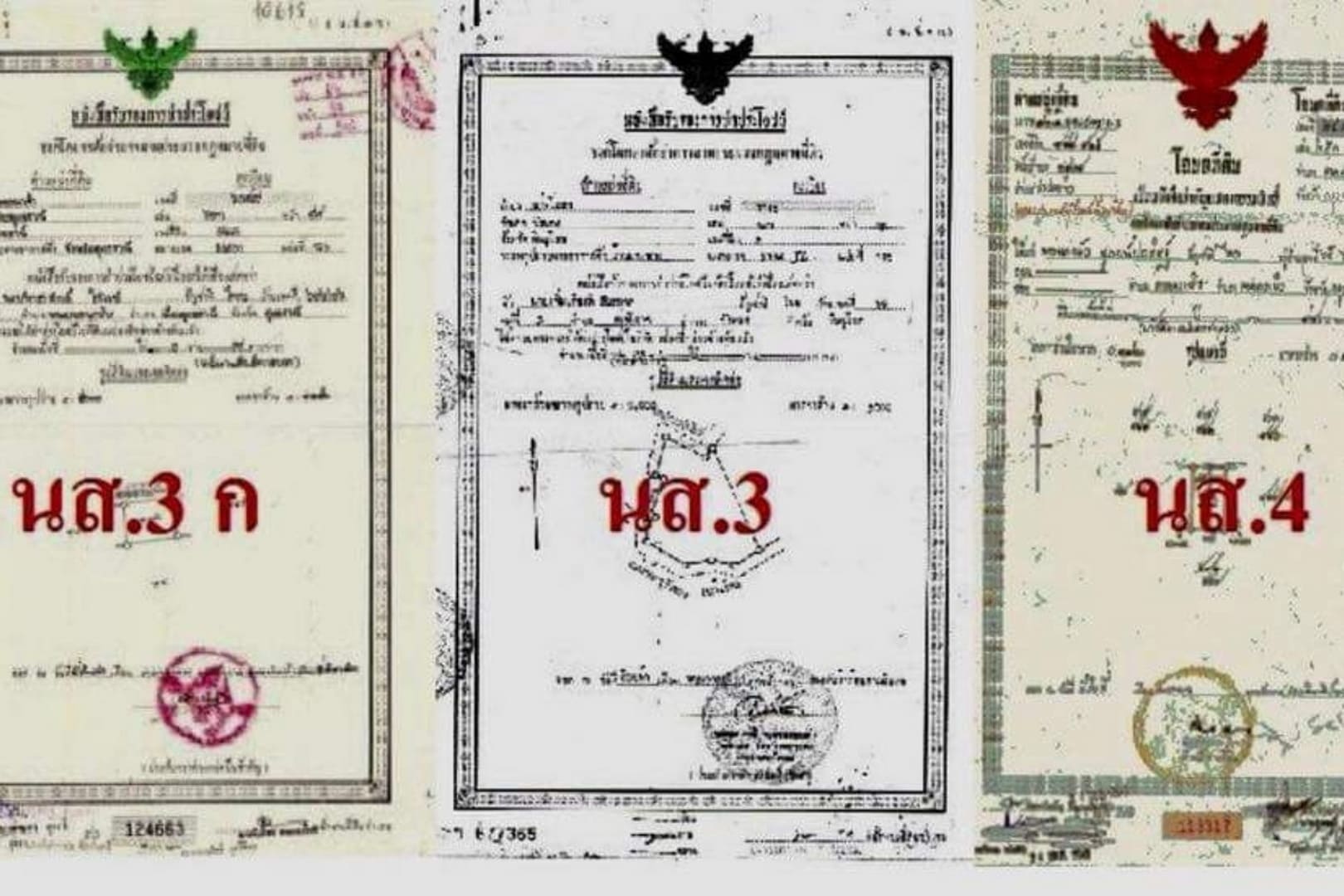
The security of any land-related structure depends not only on the legal arrangement used, but also on which type of title deed is attached to the plot. Thai title deeds vary significantly in the protection they offer, and not all are appropriate for foreign buyers.
Title deed comparison
A Chanote (NS4J) is the only title deed where plot boundaries are fixed by GPS survey and centrally registered by the Land Department. For any foreign buyer entering a lease or superficies agreement on Phuket land, a Chanote is the starting point that should not be compromised. A Nor Sor 3 Gor can be acceptable in well-researched situations where a clear upgrade path to Chanote exists, but it requires additional due diligence from your legal team on boundary clarity and outstanding disputes.
What the 2025 Supreme Court Ruling Means for Buyers
A landmark ruling issued on 18 March 2025 (Case No. 1140/2568) by the Thai Supreme Court resolved a long-running question about lease renewals. The court held that pre-agreed automatic-renewal clauses in lease agreements are not enforceable under the Civil and Commercial Code. Section 540 of the Code caps the maximum lease term at 30 years, and any extension beyond that requires a fresh agreement between willing parties at the time of renewal, not a pre-committed automatic trigger.
The practical implication for buyers is significant: a leasehold purchased on the basis of three automatic 30-year renewal periods provides a legally guaranteed right over only the initial registered term. The Australian-Thai Chamber of Commerce published a detailed professional analysis of the ruling. Buyers who have already signed agreements marketed as “30+30+30” should seek independent legal advice on what contractual protections remain enforceable within their specific arrangement.
The 99-Year Lease Proposal: Where Things Stand in 2026
The Thai government has been developing legislation that would extend the maximum statutory leasehold for foreigners from 30 to 99 years. The proposal gained parliamentary momentum in late 2025 and is intended to attract longer-term foreign investment while keeping the fundamental prohibition on direct land ownership unchanged.
As of the first half of 2026, the bill has not received Royal Assent or been published in the Royal Gazette. The legal position is unchanged: the maximum registrable lease term is 30 years. Buyers should treat any marketing material that presents a 99-year leasehold as a current legal right, rather than a possible future development, with caution.
Steps to Securing Land Access in Phuket
Whether the goal is a private villa site, a boutique development, or a speculative land holding, the process for legally securing access to Phuket land follows a consistent sequence.
- Define the intended use and time horizon clearly. A lifetime usufruct suited to a retiree building a personal home is structured very differently from a 30-year superficies combined with a lease, which is better suited to an investor planning to sell or sublease during the term.
- Engage a qualified Thai property lawyer before any site visit or offer. The lawyer’s role begins with verifying the title deed, checking for encumbrances and zoning restrictions, and advising on the appropriate structure. Retain independent legal counsel, not a solicitor recommended by the developer or the seller.
- Conduct a title search at the Land Department. The lawyer requests a formal search that reveals mortgages, registered leases, rights of way, servitudes, and any ownership disputes on the plot.
- Negotiate and draft the primary agreement. For a lease or superficies, this document defines the registered term, the consideration, the parties’ rights regarding construction and subleasing, and the handling of any structures on the land.
- Register the agreement at the Land Department. An unregistered lease or superficies is binding only between the two contracting parties. If the Thai landowner sells the plot to a third party, an unregistered agreement offers no protection against the new owner.
- Document the fund transfer correctly. Overseas funds should arrive in Thailand through the Thai banking system as a foreign currency transfer. The receiving bank will issue a Foreign Exchange Transaction Form (FET Form) for transfers above USD 50,000 or equivalent. Maintain this documentation for all significant property-related transactions.
Our complete Phuket buying guide covers the full transaction process, including taxes, transfer fees, and the most common points of failure at each stage.
Due Diligence Checklist Before Committing to a Phuket Land Plot
Before any deposit is paid, confirm each of the following:
- Title deed is a Chanote (NS4J), verified directly at the Land Department rather than just viewed on paper provided by the seller or agent
- Registered owner on the deed matches the person or entity named in the sale or lease agreement
- No mortgages, encumbrances, existing leases, rights of way, or other registered interests appear on the title
- Zoning classification under the applicable Phuket City Planning Act permits the intended use of the plot
- Legal road access exists as a registered right, not merely as access by habit or courtesy of a neighbouring landowner
- No environmental or coastal setback restrictions limit building coverage on the plot
- Any existing structures on the plot have valid construction permits (Por Ror 1)
- The proposed lease or superficies agreement has been drafted by your own independent Thai lawyer, not adapted from a developer’s standard template
The Anan team has worked with international buyers across Phuket for years and can connect you with reputable legal advisors from the start of your search. Speak to our Phuket buyer’s agent team to understand the current land market and which legal structures are most commonly applied in each area.
The Path to Secure Land Access in Phuket
Buying land in Phuket as a foreigner is not a closed door, but it is a structured one. Leasehold and superficies rights, properly registered at the Land Department on a Chanote-titled plot, give serious buyers a secure and workable position. Structures that rely on nominee shareholders, or that assume pre-agreed renewals guarantee 90 years of tenure, introduce legal exposure that Thai courts and enforcement bodies are now actively addressing.
The market offers substantial choice for buyers who understand the framework: hillside plots near Layan and Cherng Talay, larger parcels suited to boutique villa developments near Bang Tao, and seafront land positions that require careful legal structuring and deep local knowledge. Start by reviewing Phuket properties for sale to develop a sense of current market options, or contact the Anan team to discuss which opportunities fit your investment objectives.
If you have worked through the legal overview and want to understand the full transaction sequence in more depth, our guide to key steps for foreign investors buying Phuket property covers the complete process from initial offer through to registration at the Land Department.
Disclaimer
This article is for general informational purposes only and does not constitute legal or financial advice. Thai property law is complex and subject to change. Always consult a licensed Thai lawyer before entering any property transaction.


Grand Oceanfront Residence Between Kata & Kata Noi


Beach Front Residence at Punyisa Oceana

Elevated 2-Bedroom Ocean View Estate: A Private Sanctuary in Naithon

Ultra-Luxury 3-Bedroom Oceanfront Sanctuary: A Pavilion-Style Estate i...

Branded 5-Star Beachfront Condominiums: A Mixed-Use Coastal Enclave in...
Absolute Beachfront 4-Bedroom Luxury Townhomes: An Elite Coastal Sanct...
Related reading